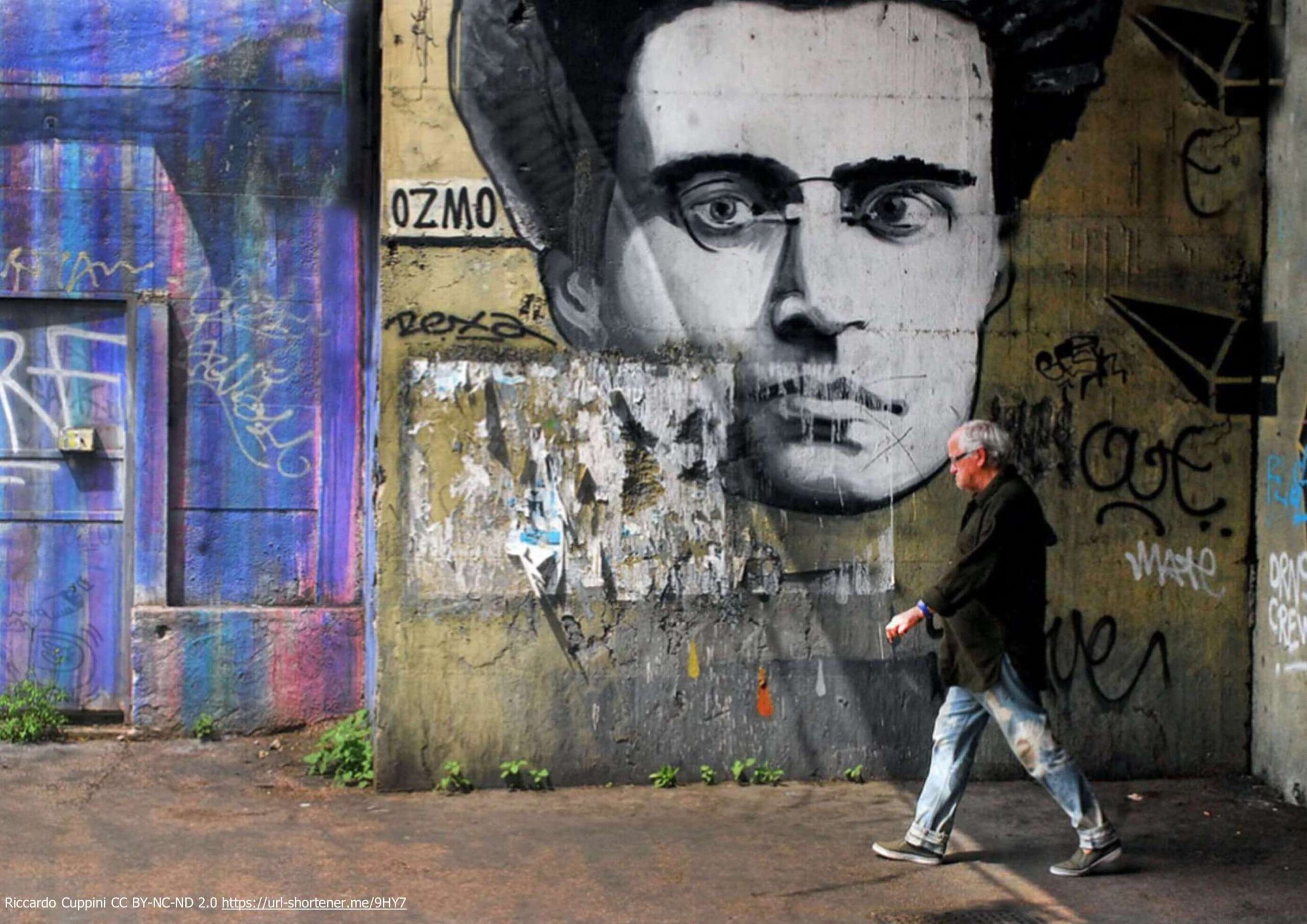
The edited volume The City as the Southern Question: Alternative Histories of Urbanisation After Gramsci, edited by Ranabir Samaddar, Enrica Morlicchio, and Sandro Mezzadra, was published at the beginning of the year by Routledge. The volume draws inspiration from Antonio Gramsci’s ideas on the Southern Question and examines a series of cities in Europe and Asia in relation to contemporary developments in urbanisation and urban experience. The content of the volume is the outcome of the international conference “City as the Southern Question”, held in Kolkata on 13–14 November 2024 by the Mahanirban Calcutta Research Group, in collaboration with the Institute for Human Sciences (IWM) in Vienna, the Rosa Luxemburg Stiftung, the Canadian Institute for Advanced Research (CIFAR), and the University of Naples Federico II.
The volume includes the chapter With Gramsci in the Park: Hegemonic Green Planning in Athens by Fereniki Vatavali and Giorgos Kandylis from EKKE, in collaboration with Penny Koutrolikou, Professor at the School of Architecture of the National Technical University of Athens (NTUA), within the framework of the EKKE self-funded research project “Urban green in Athens: socio-spatial inequalities and planning practices”. This chapter examines moments from the older and more recent history of Pedion Areos park, through the lens of the ongoing contestation over its desired design, situated within hegemonic ideas about the city as well as the nation-state.
The authors’ research highlights that the planning, implementation, maintenance, and redevelopment of green spaces -particularly large and emblematic ones – go far beyond concern for a green and healthy urban environment. They also serve and reconcile other broader, and at times conflicting, objectives, such as the management of the past and the modernisation of the city’s image, the provision of spaces for recreation and the promotion of private consumption, the cultivation of national ideals and alignment with trends in the international context—often characteristic of confrontations within the global “South” as it seeks its position vis-à-vis the “North” or the “West”.
In the selection of alternative directions, a key role is played by intellectuals who engage in debate, confrontation, and decision-making, drawing resources from their participation in specific institutions (political, administrative, scientific, economic, cultural), always choosing between different desirable uses while also distinguishing between desirable and undesirable users.
Other chapters in the volume that also focus on examples from the Greek context include those by Sevasti Trubeta, Marginalised Places—Silenced Solidarities: An Autoethnographic Study on Refugees and Solidarity on Lesvos Prior to Summer 2015, and by Olga Lafazani and Thanasis Tyrovolas, From Financial Crisis to Refugee Crisis: Management and Resistance in Athens.
For more information:
Samaddar, R., Morlicchio, E., & Mezzadra, S. (Eds.). (2025). The City as the Southern Question: Alternative Histories of Urbanisation After Gramsci. Routledge.